Quick facts:
| Property |
Detail |
| Chemical formula |
Ca(OH)₂ |
| IUPAC name |
Calcium Hydroxide |
| Common names |
Hydrated lime, slaked lime, cal, pickling lime |
| Molecular weight |
74.093 g/mol |
| Density |
2.211 g/cm³ |
| Appearance |
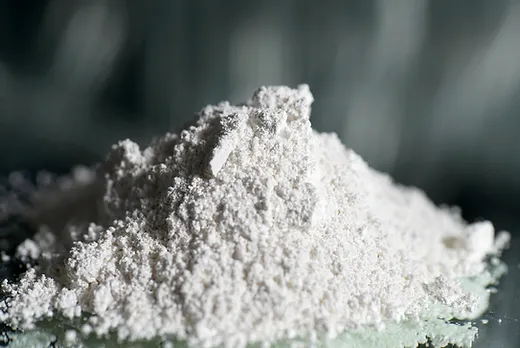
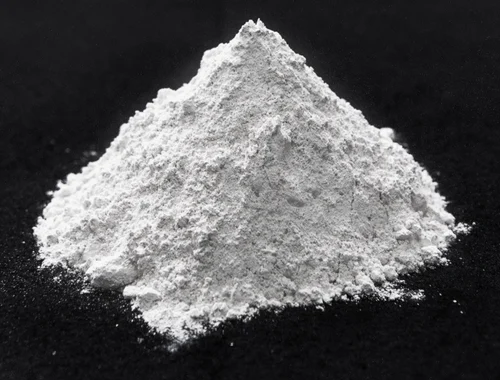
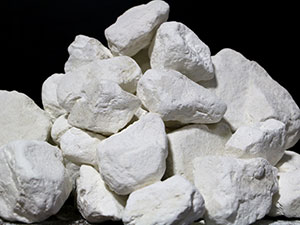
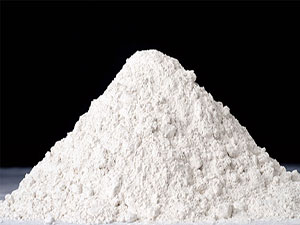
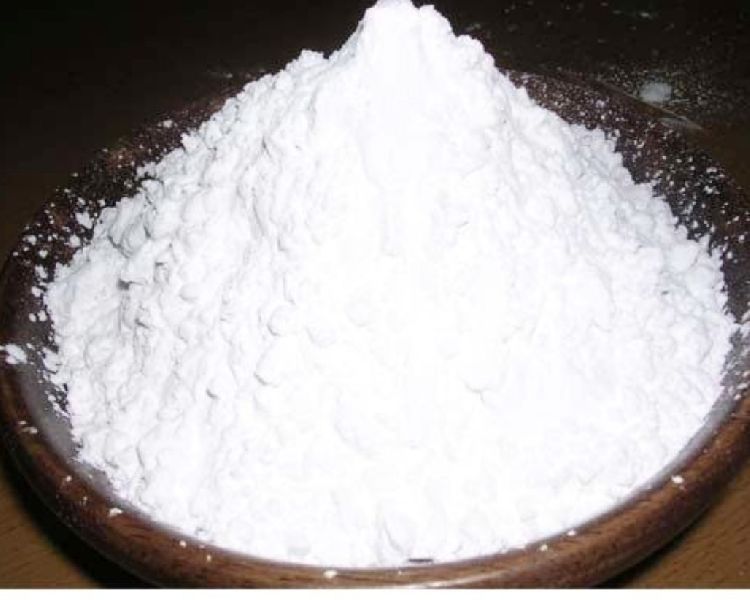
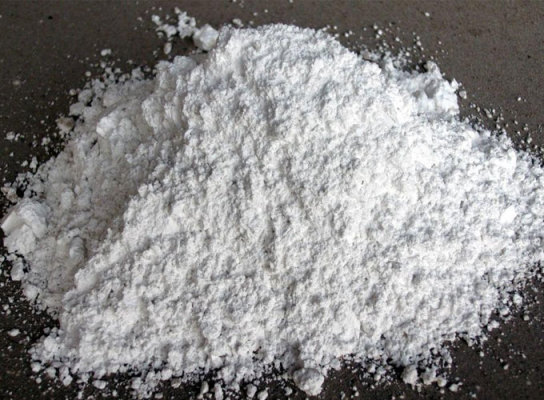
White powder or colorless crystal |
| Melting point |
853 K |
| Acid insoluble (as SiO₂) |
0.20 ± 0.60 |
| Food additive code |
E526 |
How is Calcium Hydroxide Produced?
Calcium hydroxide is produced by reacting calcium oxide (CaO) with water (H₂O). The reaction is strongly exothermic — it releases a significant amount of heat:
CaO + H₂O → Ca(OH)₂ + Heat
Because the compound dissociates into calcium and hydroxide ions in solution, it behaves as a strong base — one of the properties that makes it useful across such a broad range of chemical, industrial, and even biological applications.
Properties of Calcium Hydroxide
- Ionic compound — dissociates in water into Ca²⁺ and OH⁻ ions
- Alkaline nature — strong base, effective for pH modification
- Slightly soluble in water — forms limewater (lime milk) when dissolved
- Crystalline structure in pure solid form
- Stable under normal conditions, though it gradually absorbs atmospheric CO₂ over long exposure
Uses of Calcium Hydroxide Across Industries
1. Water & Sewage Treatment
Calcium hydroxide is used to clarify water as part of sewage treatment processes, helping precipitate out impurities before discharge or further processing.
2. Paper Manufacturing (Kraft Process)
Ca(OH)₂ is a key chemical in the Kraft process used to convert wood into pulp for papermaking.
3. Leather Processing
In leather production, calcium hydroxide is used to detach hair and fur from hides — a standard step in the tanning process.
4. Sugar Processing
Sugar beet and sugarcane processing uses carbonation, a purification step that requires calcium hydroxide to clarify the extracted juice.
5. Plastics Manufacturing
The manufacture of various plastics relies on calcium hydroxide as a processing chemical.
6. Food Preparation & Pickling
Calcium hydroxide is classified as food additive E526 and is commonly used in pickling — cucumbers, for example, are frequently prepared using Ca(OH)₂ to maintain crispness during the pickling process.
7. Dentistry
In dental root canal procedures, calcium hydroxide is used to fill and disinfect the canal space within a tooth, owing to its antibacterial and biocompatible properties.
8. Hair Care & Ebonite Manufacturing
Calcium hydroxide is an ingredient in certain hair care product formulations, and is also used in the manufacturing of ebonite (hardened rubber).
9. Ammonia Production
Calcium hydroxide is an essential ingredient in industrial ammonia production processes.
10. pH Modification
Because of its simple, predictable alkaline behavior, calcium hydroxide is widely used across chemical processes wherever pH needs to be raised or controlled.
Benefits of Calcium Hydroxide
- Cost-effective — an inexpensive chemical relative to the breadth of its applications
- Multi-purpose — genuinely useful across food, industrial, medical, and construction-adjacent fields, which is unusual for a single compound
- Safe when properly handled — effective and manageable with standard precautions
Calcium Hydroxide vs. Hydrated Lime vs. Slaked Lime — Why Three Names?
Calcium hydroxide, hydrated lime, and slaked lime are chemically identical — all Ca(OH)₂. The different names largely reflect which industry or context is using the term:
| Term |
Where it's typically used |
| Calcium Hydroxide |
Scientific, chemical, pharmaceutical, food-grade, and cross-industry contexts (this page) |
| Hydrated Lime |
Industrial and technical specification sheets — water treatment, steel, chemical manufacturing grades and mesh sizes |
| Slaked Lime |
Traditional construction, agriculture, and general/informal use — including forms like lime putty and milk of lime |
If you need detailed industrial purity grades (70–94%), mesh sizing, or bulk pricing, see our Hydrated Lime page. If you're interested in traditional construction forms like lime putty or whitewash, see our Slaked Lime page.
Safety Precautions
Calcium hydroxide is a strong alkali and should be handled with standard chemical-safety precautions:
- Wear protective gloves, eyewear, and clothing when handling
- Avoid inhaling dust
- Store in a cool, dry place away from moisture and acids
- In case of skin or eye contact, rinse thoroughly with clean water immediately and seek medical attention if irritation persists
Common Questions Before Sourcing Calcium Hydroxide
- Do I need food-grade, pharmaceutical-grade, or industrial-grade calcium hydroxide? Applications like pickling (E526) or dental use require different purity and contamination controls than general industrial use — confirm your grade requirement before ordering.
- Is "calcium hydroxide" the same product as "hydrated lime" on a spec sheet? Yes, chemically — if you're comparing products at the same purity and particle size, they're the same material regardless of which name is used.
- How should it be stored? Calcium hydroxide is best kept in a cool, dry, sealed environment away from moisture and acids to preserve quality and shelf life.
- Is a sample worth requesting before a bulk order? Yes — as with any lime-based product, a sample helps confirm purity and consistency for your specific application before committing to volume.
Sourcing Calcium Hydroxide from Shivi Minerals
Shivi Minerals is a leading calcium hydroxide manufacturer in India, based in Khimsar, Nagaur, Rajasthan. The company was founded in 2010, but its promoters bring over four decades of lime-industry experience dating back to 1981 — giving Shivi Minerals a depth of technical know-how well beyond its own founding date.
Manufacturing scale:
| Detail |
Specification |
| Head office |
51 Ashok Nagar, Pal Link Road, Jodhpur, Rajasthan |
| Manufacturing location |
Khimsar, Nagaur, Rajasthan |
| Company founded |
2010 |
| Promoters' industry experience |
Since 1981 (40+ years) |
| Own production capacity |
Up to 75,000 MT of hydrated lime/calcium hydroxide per year |
| Additional associate-concern capacity |
Up to 40,000 MT per year |
| Purity grades offered |
Approximately 70% to 94% Ca(OH)₂ |
| Manufacturing technology |
Vertical Shaft Lime Kilns (VSK), with rigorous quality control |
Why buyers choose us as a calcium hydroxide manufacturer:
- Combined production capability of up to 115,000 MT/year across our own facility and associate concerns
- Multiple purity grades to match different industrial applications — water treatment, construction, metallurgy, chemicals, and agriculture
- Advanced VSK kiln technology paired with consistent quality control
- Four decades of promoter-level experience in lime manufacturing, since 1981
Get a quote or request a sample: Contact us with your required purity grade and volume. For detailed grade specifications, mesh sizing, and pricing, see our full Hydrated Lime product page.